Library
Library and OSU
The library layer connects vendors, products, engines, families, patches, and articulations to the tracks where you actually compose.
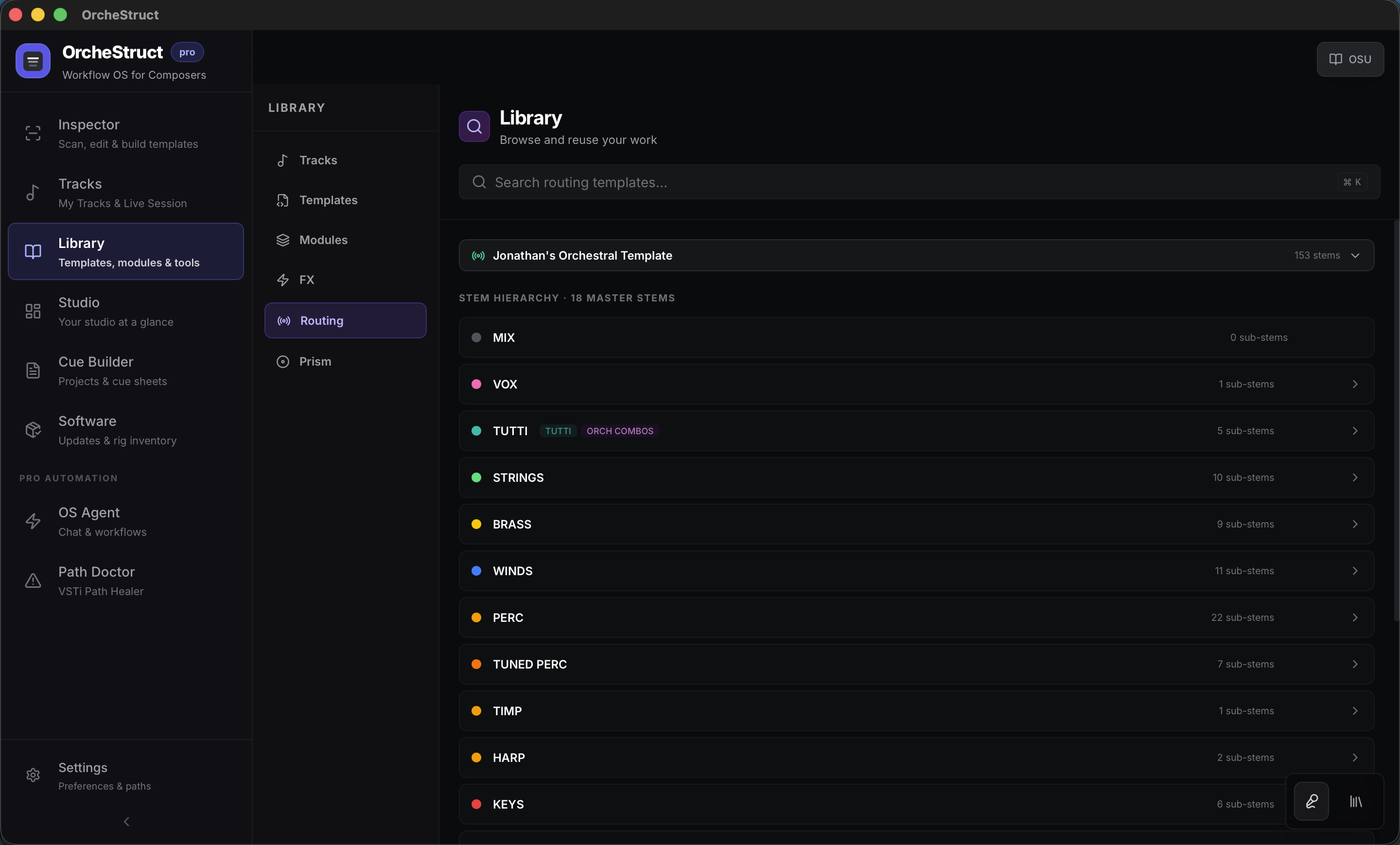
What The Library Layer Stores
Sample libraries are only useful in context. OrcheStruct tracks vendor, product, engine, family, patch, and articulation clues so a DAW row can mean more than a name string.
- Vendor and product identity.
- Engine such as Kontakt, SINE, Opus, Spitfire Player, VSL, Musio, or Omnisphere.
- Musical family and instrument role.
- Patch and articulation behavior where available.
- Ownership and visibility state.
How It Helps
Good library identity makes search, routing, repair, and agent workflows more specific. A track can be treated as a musical object instead of a mystery label from an old template.